

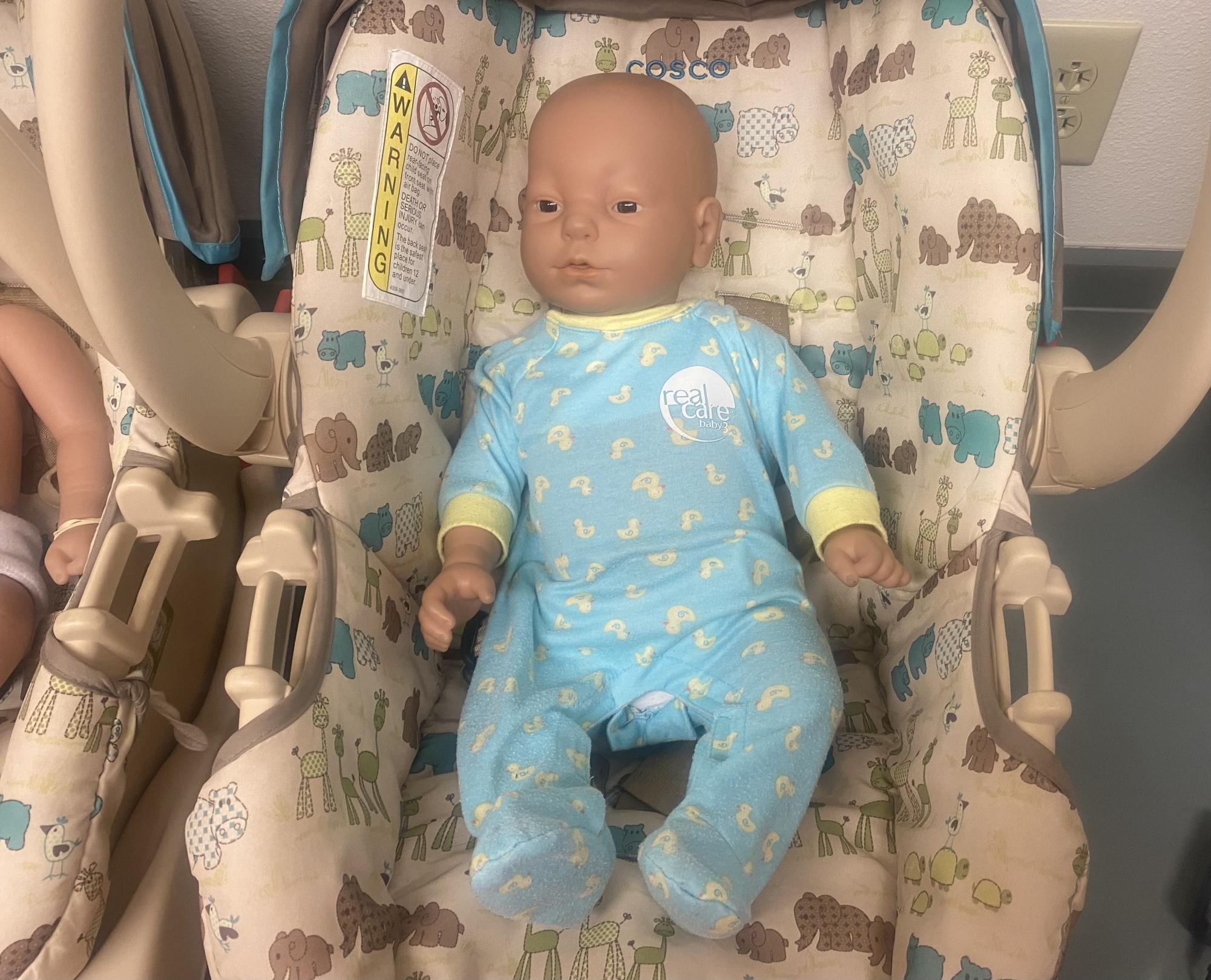
Tensions are high as students take home their own babies, not knowing what to expect. Many students go into the human growth and development class excited to take their own babies home at the end of a school day, spend the night with them, and bring them back the next morning.
Human growth and development is a class offered to sophomores and up. Two teachers teach this class, Mrs. Kandi Bennett and Mrs. Trysa Damiano. A prerequisite for this class is health class, which every student is required to take—a great opportunity for students wanting to take the healthcare or education path… despite the disruption of sleep.
“It was just really hard waking up in the middle of the night to feed the baby and burp it,” sophomore Autumn Kidd said. “It would need to be fed and taken care of for different durations of time.”
Students join healthcare classes, and this class in particular, for insights into what to expect for the future and future parenthood. Human growth and development lets students have a glance into what it’s like to have a child.
“It was very eye-opening and frustrating to take care of the baby and balance my homework,” sophomore Grace Gordan said. “I’d do it again, but on a day I didn’t have as much homework.”
Most go into this project not knowing what it will entail, and they come out more knowledgeable than before, not only about parenthood, but how to manage real-life situations with a child.
“I’d rate the experience a 5/10,” Gordon said. “I’d wait until I was older [to have kids] to have more stability.”
With this project came a public trip with the baby. Students were tasked to take care of their baby in public and to provide the baby with its necessities outside of the house. This task is time-consuming and difficult to remain organized and composed.
“I had to take it on one public outing,” Kidd said. “I thought that part was fun.”
The baby was set with different times to start crying, so it started crying during the day and during the night. Some babies were calmer during the night than others.
“There were a lot of people who said their baby woke them up a bunch,” Gordon said. “My baby only woke me up twice.”
This project gave many students a helpful look into the future, showing them what it was like to juggle school, homework, work, and a baby.
“I think it really gave an insight into what it’s like to take care of a baby,” former human growth and development student junior Kenedi Clevenger said. “Which was beneficial for my future and my future careers.”
Babies are difficult to care for while balancing your own life. Not many students realized that until they had their own baby to take care of.
“I’m not confident in parenting skills right now,” Clevenger said. “I think it would be hard to juggle a job, school, and a kid at this stage in my life.”
As students look back on their robot baby experience, many recognize how difficult it would be to have a human baby at this early stage of their lives and are relieved the baby robot parenting was a temporary trial.