
Feminine products can be a sensitive topic; some may feel embarrassed to talk about them, but almost every woman has them. Recently, the topic of free products and how much of an issue period poverty is has been brought up at Powell High School.
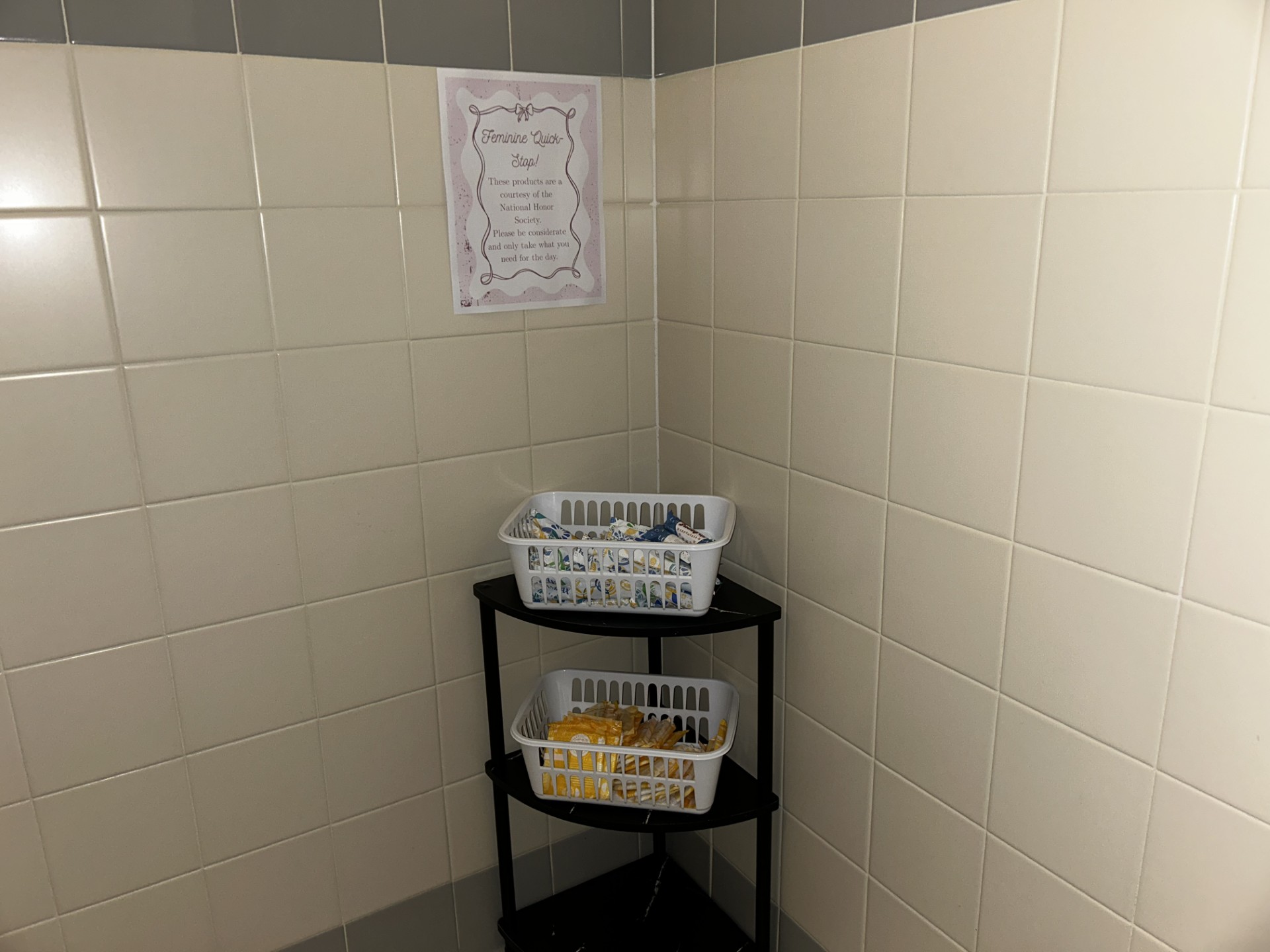
Powell High School’s National Honor Society club started the year off with a whole new officer team, including a new advisor. This has led to many new service opportunities being offered and more structure to the club as a whole.
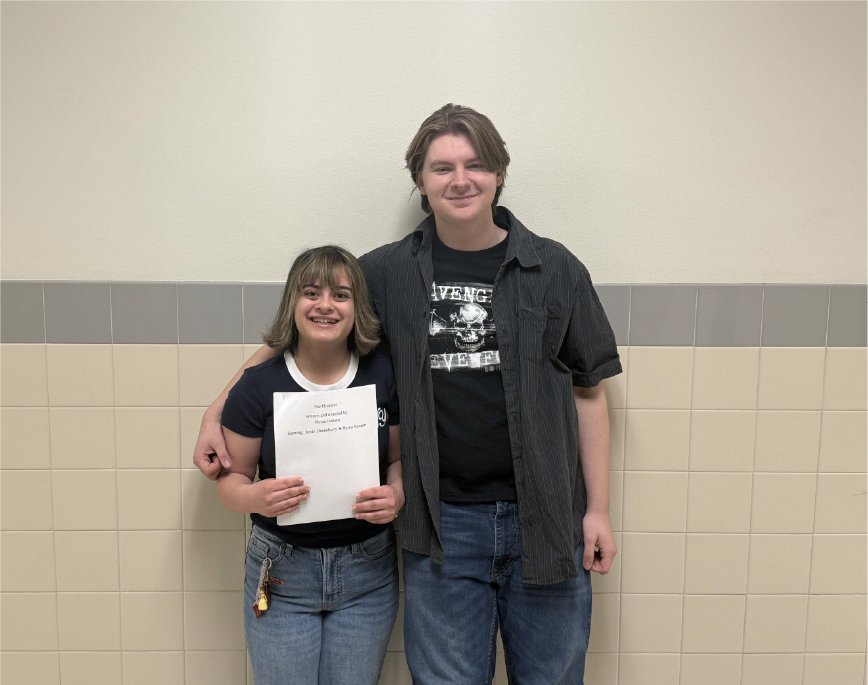
“We had a National Honor Society officer meeting,” National Honor Society adviser and Learning Center Coordinator Nancy Cooley said. “One of our officers, Nalani Jordan, brought up that she thought it would be a good idea and a need to provide feminine hygiene products in the girls’ bathrooms.”
The National Honor Society had struggles justifying the need for an additional location where students could get pads and tampons aside from the nurses’ office.
“I do feel it was a little upsetting having to haggle for [pads and tampons],” senior Luci Dees said. “As we are women, this is our bathroom. Our products have been out for several days and have not been abused at all.”
Before December, the nurse’s office was the only available place to get these types of products, along with other menstrual care products.
“Students can come in any time to get supplies,” school nurse Jennifer Phillips said. “Tampons and pads are offered and located discreetly in the plastic wall hanging behind the nurse’s office door. Students can come in any time and do not need to ask permission from me to take supplies. Students do not need to sign in unless they need a tardy pass for their teacher to excuse them from being late.”
Some of the extra steps resulted in getting help for other issues students may be having.
“I don’t have a strong opinion regarding whether these are unnecessary steps,” Mrs. Phillips said. “It does allow me and the student to address whether the student could use additional interventions. For instance, getting pain relief medication or a heating pad. The stock in my office is always available, so there is no risk of not having what is needed.”
The National Honor Society spearheading this change demonstrates that students have more power than they think in making these changes.
“I think that any student-led change is great as long as it goes through the proper channels for permission,” Mrs. Phillips said. “Change can’t happen if a problem is not identified to staff, and solutions are always helpful.”
When looking at other examples, many people picture the classic quarter vending machine, where you can spend a quarter for these products.
“I do think it should be the norm,” Dees said. “Or at least have a dispenser where you pay 25 cents. It’s upsetting that we can’t get the products we need in case of an emergency.”
With low student numbers in schools like Powell and Cody compared to high numbers in Cheyenne and Casper, making these free product changes depends on the need and the number of students at each school.
“I think each school needs to do what is best for its population,” Mrs. Phillips said. “Safe dialogue between students and staff is the best way to ensure this is happening, and positive change can occur. If no one knows there is a problem, change can’t happen.”
Period poverty can be described as a lack of access to menstrual hygiene products, education, and sanitation facilities. Student access to these products at school can be a huge help.
“Period poverty is always a concern,” Mrs. Phillips said. “I always make sure to tell students they can take what they need when they come in. Having supplies in my office is an opportunity for me to address whether there are any long-term supply needs that I might be able to facilitate.”
When looking at other supplies the school provides, such as deodorant, eye drops, and Tylenol, all at no cost for the student, it makes the pads and tampons seem like such a small thing to not include.
“Period poverty is a big issue,” Dees said. “It’s something every woman goes through, yet we’re expected to have to buy it every month. There are free food programs in school, but nothing for women’s health.”
Lack of knowledge about period products happens in all kinds of scenarios. For example, take NASA, which sent 100 tampons for a seven-day trip to space. At shorter distances, even traveling to the nurse’s office to get pads can seem like a perilous journey.
“I think that a girl who starts their period and isn’t prepared at school basically has to do the walk of shame to the nurse,” Mrs. Cooley said. ”They have to go there, get it, then go back to the bathroom.”
With this issue being very female-leaning, many male PHS students have no clue that these changes are happening. That doesn’t mean the support is any less.
“I feel like girls shouldn’t need to ask for hygiene products,” senior Phu Nguyen said. “I think that all women should be able to grab as much as they need without feeling guilty.”
Mrs. Cooley agrees and is pleased by the impact her students have made.
”I think there’s a huge amount of support for this with girls and even guys that I’ve talked to that can talk about this kind of stuff,” Mrs. Cooley said. “It’s something that I think should be offered in Wyoming, and we can start.”