




















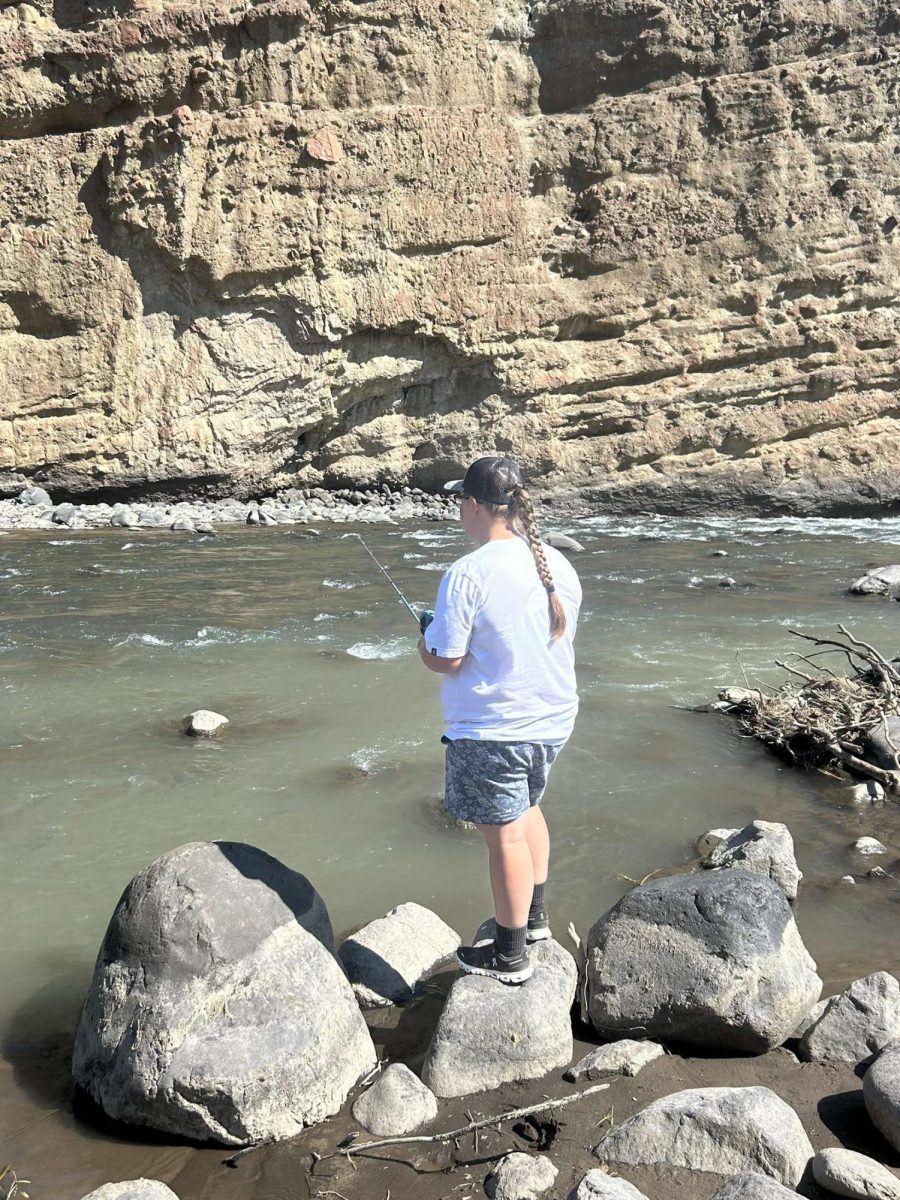










As the school year comes to a close, it is common to hear about young men and women receiving their mission calls. For members of the Church of Jesus Christ of Latter-day Saints, a mission is a unique opportunity.
For non-members, the concept of a mission isn’t always entirely understood.
“A mission for the Church of Jesus Christ of Latter-day Saints is basically an assignment to a different place, and potentially a different language,” senior Melissa Merritt said. “It is where you go and teach people about the gospel and serve, and just be there to support the church community wherever you are.”
For many members, going on a mission is an ordinary next step after high school.
“I just prayed about it,” senior Dawson George said of making the decision to serve. “I’m a senior in high school, so I’m getting ready to take some big steps in my life and trying to figure out what I want to do with my life. I know hundreds of men and women that have served missions, and every single one that I’ve talked to never said they regretted it.”
For years, young men have been able to leave at age eighteen after high school, and recently, the church changed the rule so that young women can do so as well, rather than at nineteen. Though given the opportunity to serve, it is not required for every member.
“You do not have to go on a mission,” Merritt said. “There is a misconception that boys have to go on a mission. It is called a ‘responsibility’ which is not forced. It is still your choice. While males are definitely encouraged to go on [a mission], you do not have to go, and females are also very much encouraged, but it’s not a responsibility for us. It’s a little less of a push, but for both genders, it is a choice.”
For each young man or woman, going on a mission is a very personal decision, and one that is not taken lightly.
“Being in the gospel has helped me so much, and there’s so many hard things in life I’ve been protected from because of the knowledge that I have,” Merritt said. “I want to share that with other people. I think the world could use some more Jesus right now. Anyone could. So I want to spread that and do something hard and fulfilling.”
Preparing for a mission goes far beyond just making the decision.
“In terms of logistics, you have to do a bunch of paperwork to make sure you’re ready and are physically prepared to go,” Merritt said. “Also, other preparation starts long before you start your papers … You prepare spiritually and do your own studies.”
Before and after submitting mission papers, future missionaries meet with church leaders who continue to guide them along the process.
“You’ll meet with your bishop probably multiple times, and he helps you out with a lot of your papers,” Merritt said. “You also have interviews, just to make sure that you’re spiritually and physically ready. You also meet with the stake president; he is higher up, but he basically just asks you the same questions and makes sure you’re ready to go.”
The process doesn’t stop with just a student’s bishop and stake president, though.
“Your Bishop and your Stake President send in your application, and they [church leaders] look at it and pray about it,” George said. “I’ve heard they put your picture up on a projector screen, up in a room, and different General Authorities look at your picture and pray about it and decide where you’ll be going.”
Ultimately, the decision of where you go on your mission isn’t up to the individual.
“You don’t get to know, and you don’t get to choose where you go on your mission,” Merritt said. “So basically, you submit all your papers, which there is a portion you can indicate if you would be more or less interested in speaking a foreign language, but besides that, you don’t get to choose… Some of the leaders in our church look through your papers, and they see a picture of you, and from there, they pray for direction on where you need to go. Then they’ll send their answer.”
While the process is quite extensive and requires patience, getting your call makes it worth it.
“About two weeks after your last interview, you’ll get an email saying, ‘Your call is ready to be opened,’” George said. “I was welding… after school one day, and my phone buzzed, and I looked at it and ‘Go to the mission portal, your call’s ready to be opened.’ I was super pumped right off the get-go, and I wanted to open it so bad right then, but I chose to wait to open it with my family. Once I got home, I called everybody I wanted to come… and had some family over, and we opened it, and that’s how I found out where I was going.”
With 450 plus missions around the world, where these individuals are assigned is very unpredictable. They can be called to serve within in the United States, or abroad, speaking a foreign language, or even in the states and speaking a foreign language, like George, who got called to the Charleston, North Carolina mission.
“I’m speaking Haitian, so I have to do language study,” George said. “Well, I don’t have to; I choose to study every day on different apps.”
For members of the Church of Jesus Christ of Latter-day Saints, missions serve many different purposes.
“There’s different ways you can look at a mission, I think, and different purposes,” George said. “For the church, it’s so we can bring more people to the truth of the restored gospel. But also for me… It’s an incredible learning experience where I’ll gain so much knowledge… because I’m so immersed in the work. I think I’ll learn a lot of good qualities and also grow closer to my Savior, Jesus Christ.”
The everyday life of a missionary looks very different from that of the average young adult. This includes spending 24 hours every day with someone they have never met.
“You’re paired up with a companion, and this is the person that you do everything with,” Merritt said. “You do a lot of personal studies, so that you know how to teach the people… you also do service, go to church on Sundays, and do a lot of training on how to be a good teacher and how to help share the gospel.”
For many missionaries, daily life looks very different from what most people might expect.
“Life as a missionary is very unique,” PHS alum and current missionary Toby Sessions said. “One thing I think a lot of people may not know about missionaries is the rigorous daily schedule we follow. We are expected to plan out every hour of our day; not one minute is wasted. We fill those hours by doing a variety of things. Whether it be knocking doors, talking to people in parking lots, teaching those who are interested or helping out in the community.”
Sessions described how every hour of the day is strictly allocated to the duties of a missionary.
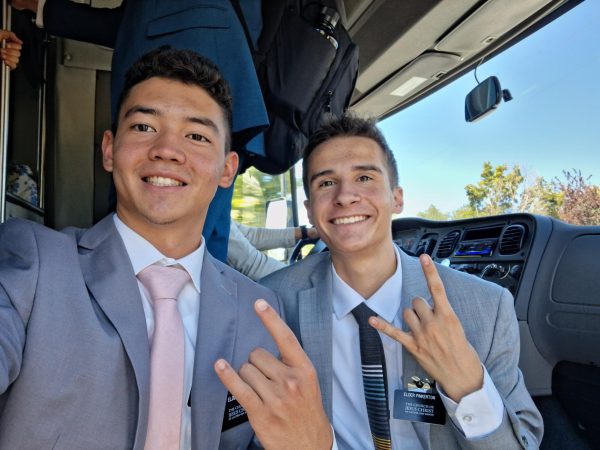
“We wake up at 6:30 A.M., and we have until 9:30 A.M. to do our one hour of Personal Study, workout, eat breakfast, and get ready,” Sessions said. “9:30 A.M. to 10:00 A.M., we plan our day. From 10:00 A.M. to 9:00 P.M., we’re doing missionary work. We do get two hours for lunch and dinner; those are our only breaks. There are times where members of the church will feed us. That’s one of my favorite things because I’m able to feel at home. We have to be back in our apartments by 9:30 P.M. and asleep by 10:30 P.M.”
However, missionaries’ schedules aren’t always rigid.
“We have one day called a Preparation Day (P-Day), and that’s our one day off,” Sessions said. “It’s when we get to do our grocery shopping, household chores, and fun activities. It’s the one day we get to talk to family and friends. As missionaries, our purpose is to invite others to come unto Christ. We volunteer to dedicate 18-24 months of our lives fulfilling this purpose.”
Missionaries experience many trials and hardships, but Sessions found that they are outweighed by the blessings he has received.
“Although this new lifestyle has been extremely difficult at times, it’s been the most rewarding seven months of my life,” Sessions said. “I have felt so much closer to our Savior, and He’s been there every step of the way. I do miss my family and friends, and yes, I do miss doing the things I love, but not one time have I felt regret for coming out here. I’ve been able to see what the world is like in another region of the United States.”
Missionaries get the chance to discover many new life lessons at a young age.
“I’ve learned so many great life skills, like talking to people and dealing with rejection,” Sessions said. “We get a lot of ‘No thank yous’ and ‘Not interested.’ Sometimes we get cussed out, or the cops get called on us, but it’s made me more resilient and reliant on the Lord. I have also learned to work in unity as well as discussing challenges I’m having with my companion. I know those are both skills that will be beneficial with future relationships. The small sample of highs we get always outweighs the overwhelming amount of lows. My mission has aided me in getting my priorities straight.”
Missionaries of the Church of Jesus Christ of Latter-day Saints dedicate eighteen months to two years of their lives to sharing the gospel, which provides them with many things in return.
“I’m so excited to see what happens these next two years, and I’m excited to see who I’m going to be when I get back,” George said.
Hans Hawley • Apr 21, 2026 at 3:19 pm
Great article. I’d love to see information about where all the current missionaries from PHS are serving and which languages they are speaking, and where the next group is being sent this coming summer and fall.
Brandon Preator • Mar 13, 2026 at 9:58 am
What a great, informative article about these young people doing pretty incredible things! Well-written!